

In a professional cleaning protocol, the detergent plays a fundamental role:
It helps loosen, dissolve, and remove dirt from surfaces.
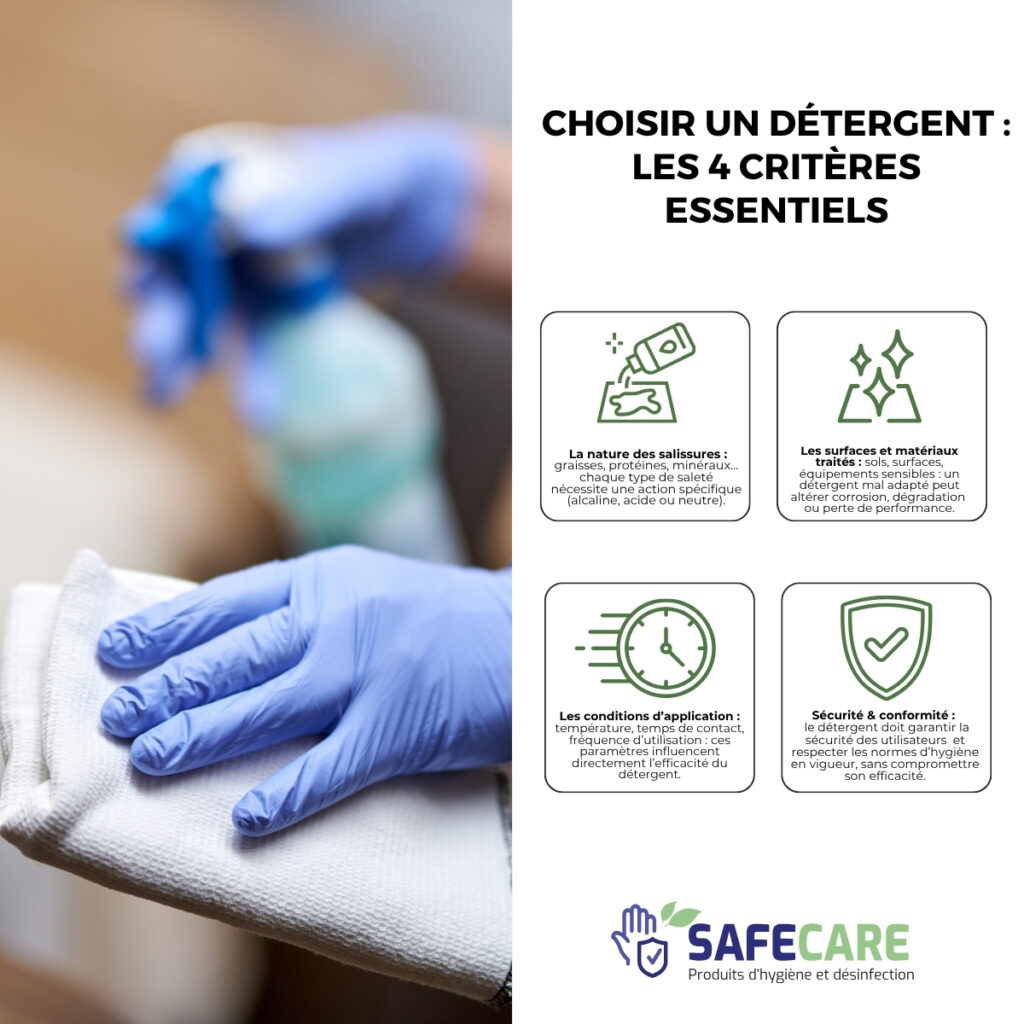
- The nature of the contaminants: Grease, proteins, mineral residues, or biofilms—each type of contaminant requires a specific chemical formulation (acidic, alkaline, or neutral pH).
- Surfaces and materials treated: floors, countertops, sensitive equipment, or surfaces that come into contact with food: incompatibility can lead to corrosion, deterioration, or a loss of performance.
- Application conditions: cleaning method, temperature, contact time, and frequency of use—these factors directly influence the detergent’s effectiveness.
Not all stains are cleaned the same way. Identifying the type of stain helps you choose the most appropriate cleaner and also protects the surfaces being cleaned, especially floors
Organic contaminants
Grease, oil…
Derived from animal or plant-based materials, these types of contaminants are very common in the food industry, the medical field, and the restaurant industry.
-based mineral stains
Limescale, scale, metal residues…
These deposits are of non-organic origin and often come from water (limescale) or the environment
Without an effective detergent, organic or mineral residues remain and compromise the cleaning process.
How do I remove them?
To effectively remove organic dirt, it is recommendedto use alkaline detergents (pH > 7, typically between 9 and 14). Their high alkalinity helps dissolve grease and break down proteins, making it easier to remove them from surfaces and floors.
Les salissures minérales nécessitent l’utilisation de détergents acides (pH < 7, généralement entre 0 et 4). Ces produits agissent en dissolvant les dépôts calcaires et les incrustations minérales, garantissant un nettoyage efficace des surfaces exposées aux résidus d’eau ou d’origine environnementale.